Where It Began
The Sumerian King List begins at Eridu.
Not Ur, the great city of the Third Dynasty. Not Uruk, the city of Gilgamesh. Not Babylon, the city that would eventually inherit Mesopotamian civilization and give its name to an era. The document that records the origin of governance on earth begins at a small site in the far south of the Mesopotamian alluvial plain, near the edge of the marshes where the Euphrates once met the sea.
"When kingship descended from heaven, the kingship was in Eridu."
Whatever "kingship descended from heaven" means — theology, metaphor, or something else — the document is specific about where it landed. The first authority. The first city. Eridu.
Two rulers are recorded at Eridu: Alulim, who ruled for 28,800 years, and Alaljar, who ruled for 36,000 years. Then Eridu fell, and the kingship was taken to Bad-tibira.
That is everything the King List says about Eridu. Two names. Two numbers. A beginning and a transfer. No deeds. No stories. No description of the city itself.
The archaeology says considerably more.
Tell Abu Shahrain
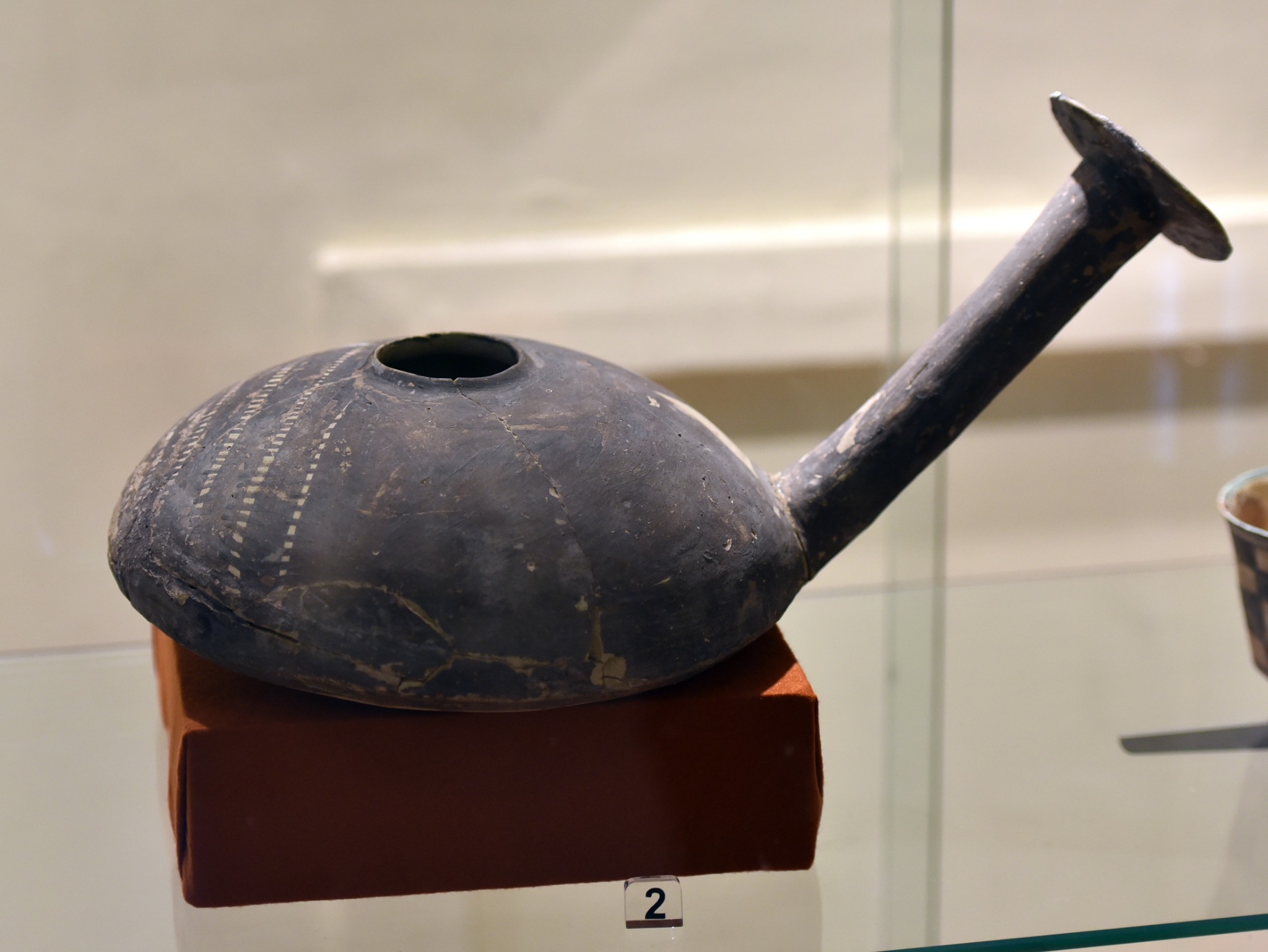
The site of ancient Eridu is known today as Tell Abu Shahrain. It lies in the far south of modern Iraq, in the Dhi Qar Governorate, roughly 12 kilometers southwest of the ancient city of Ur. The site is now deep in the desert, but in antiquity it sat at the edge of a freshwater marsh system fed by the Euphrates — a landscape of reeds, open water, and fertile ground at the boundary between the river system and the Persian Gulf.
Eridu was excavated in the 1940s and 1950s by Iraqi archaeologists Fuad Safar, Mohammad Ali Mustafa, and Seton Lloyd. Their work revealed one of the most remarkable sequences in Mesopotamian archaeology: excavators identified a sequence of eighteen architectural levels in the sacred precinct, traditionally interpreted as successive temple phases built one above another, extending from the surface down to the earliest occupation of the site.
Eighteen levels. On the same precinct. Over a span of roughly three thousand years.
The Temple Sequence
The Eridu temple sequence is one of the most significant architectural records in the ancient Near East, and it deserves careful description because of what it reveals about the nature of the site.
The deepest level — Temple XVII — dates to approximately 5400 BC, during the Ubaid period. It is a small, simple structure: a single room, roughly three meters square, with a niche in one wall that may have served as an altar or offering platform. A pedestal stood in the center. Fish bones were found in the offering area — consistent with the later association of Eridu with the deity Enki, who was connected to fresh water and aquatic life.
This is not a grand monument. It is a modest room, built of mud brick, in a marsh settlement at the edge of the habitable world. But it was built with intention. It was oriented. It had a designated space for offerings. It was, by any reasonable interpretation, a place set apart for a purpose beyond daily habitation.
Each successive structure was built over the remains of the one before it. Across the sequence, sacred structures were repeatedly rebuilt in the same precinct, often over earlier remains, gradually raising the ceremonial area. The builders did not abandon the old structures and start fresh elsewhere. They filled the existing space with clean sand or rubble, leveled the surface, and built again on the raised platform that the previous construction had become.
This practice — building on the same sacred precinct, generation after generation, century after century — is attested at other Mesopotamian sites. But the Eridu sequence is among the longest, the most continuous, and the most thoroughly documented.
The temples grow larger and more elaborate as the sequence ascends. Temple XVII is a single room. The later temples add additional rooms, buttressed walls, and more complex floor plans. By the upper levels, the temple complex has become a substantial architectural project — still on the same spot, still oriented the same way, but now reflecting the resources and organizational capacity of a larger, wealthier community.
Temple I — the final structure at the top of the sequence — dates to approximately the early third millennium BC. By this point, the accumulated platform of demolished and rebuilt temples had created an artificial mound — a raised precinct that elevated the temple above the surrounding settlement. This is the architectural principle that would later develop into the ziggurat: a monumental raised platform supporting a temple at its summit.
The Eridu temple sequence may represent the origin of the ziggurat tradition. The idea of building upward — of placing the sacred structure on an elevated platform — did not begin as a deliberate architectural plan. It began as the cumulative result of thousands of years of building on the same spot. Each new temple stood higher than the last because it stood on the ruins of its predecessors. The height was earned, not designed.
Enki's City
In later Sumerian tradition, Eridu was the city of Enki — known as Ea in the Akkadian language that eventually supplanted Sumerian. Enki was one of the most important deities in the Mesopotamian pantheon, and his attributes are worth examining because they connect to themes that recur throughout the King List tradition.
Fresh water. Enki was the lord of the abzu — the freshwater abyss that the Sumerians believed lay beneath the earth. Fresh water in southern Mesopotamia was precious and precarious. The alluvial plain was flat, the groundwater often saline, and access to reliable fresh water determined where permanent settlement was possible. Eridu's location at the edge of the freshwater marshes gave it access to the resource that the surrounding desert lacked.
Wisdom and knowledge. Enki was the keeper of the me — a Sumerian concept that is difficult to translate but encompasses the fundamental principles of civilization: the arts, crafts, institutions, and knowledge systems that make organized society possible. The me were not invented by humans. In Sumerian tradition, they were divine — held by Enki and distributed by him to the cities of Sumer.
The list of me preserved in Sumerian literature is striking in its specificity. It includes kingship, priesthood, truth, the descent into the underworld, sexual intercourse, law, art, music, metalworking, leatherworking, building, wisdom, judgment, and dozens of other concepts — both abstract principles and practical skills. Taken together, the me read almost like a curriculum: the complete set of knowledge and institutional frameworks required to operate a civilization.
And they were kept at Eridu.
Craftsmanship. Enki was associated with making things — with the skilled work that transforms raw materials into useful objects. He was the patron of artisans, builders, and problem-solvers. In the mythological tradition, Enki is consistently the deity who figures things out — who finds solutions to problems that baffle the other gods.
The flood warning. In the Sumerian flood tradition, it is Enki who warns Ziusudra that the gods have decided to destroy humanity with a flood. Enki breaks ranks with the divine council to save one human being — and with him, the continuity of civilization. In the Babylonian version, Ea (Enki's Akkadian name) performs the same role, warning Utnapishtim. The deity associated with Eridu is also the deity who ensures that something survives the flood.
The conventional reading is that these associations developed over time — that Eridu's reputation as a sacred site attracted the mythology, and the mythology amplified the site's importance. The city came first, and the stories grew around it.
That reading is reasonable. But the associations are consistent in a way that is worth noticing. The city where kingship first descended from heaven is also the city of the deity who holds the complete knowledge of civilization, who is associated with fresh water and craftsmanship, and who saves humanity from the flood. These are not random associations. They cluster around a single location — the first location on the King List — with a coherence that invites the question of whether the mythology preserved a memory rather than generating one.
The Oldest City?
Eridu has frequently been called the oldest city in the world. That claim requires some qualification.
Eridu is among the oldest known settlements in southern Mesopotamia. Its deepest occupation layers — the Ubaid-period levels beneath the temple sequence — date to approximately 5400 BC. This makes it roughly contemporary with, or slightly earlier than, the earliest occupation levels at several other sites in the region, including Ur and Uruk.
But "oldest city" is a title that depends heavily on definition. Jericho, in the Jordan Valley, has occupation layers dating back roughly ten thousand years. Çatalhöyük, in Anatolia, was a settlement of several thousand people by approximately 7500 BC. If "city" means any permanent settlement of significant size, Eridu is not the oldest.
What Eridu may be is the oldest continuously occupied sacred site in southern Mesopotamia — the place where institutional religious or ceremonial activity began and continued without interruption for roughly three thousand years of documented temple construction. The temple sequence is not simply evidence of habitation. It is evidence of institutional continuity — a community that maintained the same function, in the same location, with the same orientation, for longer than the historical record of most modern nations.
And it is the site that the Sumerian King List places first. Not because it was the largest city, or the wealthiest, or the most powerful. Because it was where the authority arrived.
The Water
Eridu's location made it unusual among Mesopotamian settlements.
Most of the great cities of Sumer — Ur, Uruk, Lagash, Nippur — were situated along the main channels of the Euphrates or the Tigris, where the rivers provided both water and transportation. Eridu was different. It was located at the southern edge of the habitable zone, at the boundary between the freshwater marshes and the open desert, near the point where the river system met the sea.
Eridu was not an obvious location for a dominant political capital. It sat at the edge of a dynamic marsh landscape rather than at the center of the later urban system.
But that location offered something enormously valuable: access to freshwater marshes, fish, reeds, transport channels, and productive wetland resources. The marsh environment was central to the economy and worldview of the earliest southern Mesopotamian settlements. The deity associated with Eridu — Enki, lord of the freshwater abyss — reflects a community whose identity was bound to the water.
If the first priority of whoever established Eridu was access to fresh water and the resources of the marsh environment — not political centrality, not military advantage — then the location makes sense. And if the mythological association with Enki and the abzu preserves a memory of why Eridu was chosen, the answer is embedded in the landscape itself.
What Eridu Asks
Eridu is a small site. It never became a great city on the scale of Ur or Uruk or Babylon. Its temple sequence is its monument — not a ziggurat built in a single campaign but a record of continuous institutional activity spanning thousands of years.
The King List says it was first. The archaeology does not contradict this — Eridu's earliest levels are among the oldest in southern Mesopotamia, and its temple sequence is the longest continuous sacred site in the region.
The King List says kingship descended from heaven and was in Eridu. The mythology says the me — the complete knowledge of civilization — were kept at Eridu by a deity associated with wisdom, water, and craftsmanship. The archaeology says someone built a small temple on the edge of the marshes around 5400 BC and then rebuilt it, on the same spot, seventeen more times over three thousand years.
Something began at Eridu. The King List records it. The mythology remembers it. The ground confirms extraordinary continuity of activity at the site from its earliest occupation onward.
What began there?
Sources & further reading
Sources: Fuad Safar, Mohammad Ali Mustafa, and Seton Lloyd, Eridu (1981); Petr Charvát, Mesopotamia Before History (2002); Harriet Crawford, Sumer and the Sumerians (2004); Electronic Text Corpus of Sumerian Literature (ETCSL), The Sumerian King List, t.2.1.1; Gwendolyn Leick, Mesopotamia: The Invention of the City (2002).